
Inside this issue
Overview
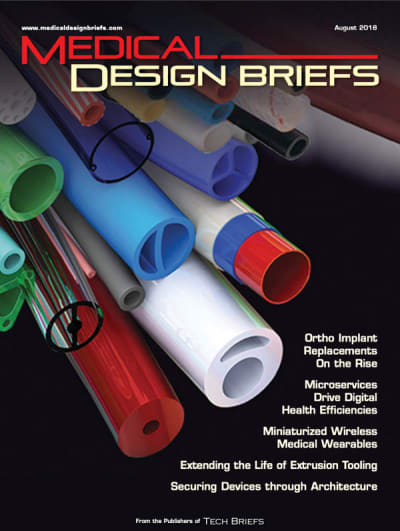
The August 2018 issue of Medical Design Briefs presents a comprehensive overview of the latest advancements and trends in the medical technology sector. This edition is particularly focused on innovations that are shaping the future of healthcare, emphasizing the integration of technology in medical design and the increasing demand for efficient, effective solutions.
Key Highlights:
-
Ortho Implant Replacements: The issue opens with an exploration of the rising trend in ortho implant replacements. As the population ages and the prevalence of orthopedic conditions increases, the demand for advanced implant technologies is surging. The article discusses the latest materials and designs that enhance the longevity and functionality of implants, ensuring better patient outcomes.
-
Microservices in Digital Health: Another significant topic covered is the role of microservices in driving efficiencies within digital health systems. Microservices architecture allows for the development of modular applications that can be updated independently, leading to faster deployment of new features and improvements. This flexibility is crucial in the rapidly evolving healthcare landscape, where timely access to data and services can significantly impact patient care.
-
Miniaturized Wireless Medical Wearables: The magazine also delves into the advancements in miniaturized wireless medical wearables. These devices are becoming increasingly sophisticated, offering real-time monitoring of vital signs and health metrics. The article highlights how these wearables are not only improving patient engagement but also enabling healthcare providers to deliver personalized care based on continuous data collection.
Extending the Life of Extrusion Tooling: A technical feature discusses strategies for extending the life of extrusion tooling used in the manufacturing of medical components. The article provides insights into material selection, design considerations, and maintenance practices that can enhance the durability and performance of tooling, ultimately leading to cost savings and improved production efficiency.
-
Securing Devices through Architecture: With the rise of connected medical devices, security has become a paramount concern. The issue addresses the importance of securing devices through robust architectural designs. It outlines best practices for integrating security measures at every stage of device development, ensuring that patient data remains protected against cyber threats.
Industry Insights:
The magazine includes contributions from industry experts who share their perspectives on the future of medical design. They discuss the importance of collaboration between engineers, healthcare professionals, and regulatory bodies to foster innovation while ensuring compliance with safety standards. The emphasis is on creating a holistic approach to medical device development that prioritizes patient safety and efficacy.
Advertising and Resources:
In addition to the articles, the issue features an advertisers index, showcasing companies that are leading the way in medical technology. This section provides readers with resources for further exploration of products and services that can enhance their own practices or research.
Conclusion:
The August 2018 issue of Medical Design Briefs serves as a valuable resource for professionals in the medical technology field. It not only highlights current trends and innovations but also provides practical insights and expert opinions that can guide future developments. As the industry continues to evolve, staying informed about these advancements is crucial for anyone involved in medical design and engineering.
Overall, this edition encapsulates the dynamic nature of the medical technology landscape, emphasizing the critical role of innovation in improving patient care and outcomes. Whether you are a designer, engineer, or healthcare provider, the insights shared in this issue are essential for navigating the complexities of modern medical design.
Features
-
Articles
6 Orthopedic Replacement Implants Market: Drivers and Developments
10 Microservices Drive Digital and Connected Health Efficiencies and Growth
15 Miniaturized Wireless Medical Wearables
18 Securing the Future of Healthcare through the Right Cybersecurity Architecture
20 Getting the Most from Your Extrusion Tooling
34 Using Optical 3D Scanning to Measure the Human Body
36 In-Wheel Suspension on SoftWheels Provides Smooth Ride for Wheelchair Users
-
R & D
24 Tissue Imaging Enables Real-Time Diagnostics
24 Dual Therapy Improves Stroke Recovery
24 Soft Contacts Monitor Glucose, Deliver Medication
25 Electronic Skin Stretched to New Limits
-
Global Innovations
Tech Briefs
-
26 Scientists Create Continuously Emitting Microlasers With Nanoparticle-Coated Beads
30 Low-Cost Plastic Sensors Could Monitor a Range of Health Conditions
31 Promising Research Could Lead to New Strategies in NMR and MRI Using Diamonds and Lasers