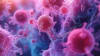

A new ultrasensitive medical imaging technique developed at Purdue University uses a pulsed laser and tiny metallic "nanocages" to enable both the early detection and treatment of disease. The system works by shining near-infrared laser pulses through the skin to detect hollow nanocages and solid nanoparticles that are injected into the bloodstream.
Unlike previous approaches using tiny metallic nanorods and nanospheres, the new technique does not cause heat damage to tissue being imaged. Another advantage is that it does not produce a background "auto fluorescent" glow of surrounding tissues, which interferes with the imaging and reduces contrast and brightness.
The gold-silver structures yielded images 10 times brighter than other experimental imaging research using gold nanospheres and nanorods. The improved performance could make possible early detection and treatment of cancer. The tiny gold-silver cages also might be used to deliver time-released anticancer drugs to diseased tissue.
Click here for the full story .