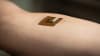

A team of scientists from North Carolina State University, the University of North Carolina at Chapel Hill, and Laser Zentrum Hannover have discovered that a naturally-occurring compound called riboflavin, which is better known as vitamin B2, can be incorporated into 3D printing processes to create medical implants out of non-toxic polymers.
The researchers used a 3D printing technique called two-photon polymerization, which can create small objects with detailed features, such as scaffolds for tissue engineering, microneedles, or other implantable drug-delivery devices. Two-photon polymerization can be used to make small-scale solid structures from many types of photoreactive liquid precursors.
The liquid precursors contain chemicals that react to light, turning the liquid into a solid polymer. By exposing the liquid precursor to targeted amounts of light, the technique allows users to “print” 3D objects. But, most chemicals mixed into the precursors to make them photoreactive are also toxic, and should not be used in a medical implant or in direct contact with the body.
The researchers determined that mixing nontoxic and biocompatible riboflavin with a precursor material can make it photoreactive, making it much more biocompatible to fabricate tissue engineering scaffolds for custom implants.