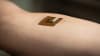

Electrical engineers at Oregon State University, Corvallis, have developed new technology to monitor medical vital signs, with sensors so tiny and inexpensive they could fit onto a bandage, be manufactured in high volumes, and cost less than a quarter.
One potential application is heart monitoring, since the system could gather data on some components of an EKG, such as pulse rate and atrial fibrillation. Its ability to measure EEG brain signals could find use in nursing care for patients with dementia, and recordings of physical activity could improve weight loss programs.
The new electronics are about the size and thickness of a postage stamp, and could be taped over the heart or at other body locations to measure vital signs. Part of what enables the low cost and size is that the unit does not have a battery. It harvests the radio-frequency energy from a nearby device, such as a cell phone.
The new technology could be used in conjunction with cell phones or other radio-frequency devices within about 15 feet, but the underlying system-on-a-chip technology can be run by other energy-harvested power sources, such as body heat, the researchers say.