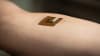

In a conventional cochlear implant, there are three main parts that are worn externally on the head behind the ear: a microphone to pick up sound, a speech processor and a radio transmitter coil. These external components may be undesirable because they raise reliability issues, prevent patients from swimming, and create social stigma. Now, a University of Utah engineer and colleagues in Ohio have developed a tiny prototype microphone that can be implanted in the middle ear to avoid such problems.
In the new system, sound moves through the ear canal to the eardrum, which vibrates as it does normally. But at the umbo, a sensor known as an accelerometer is attached to detect the vibration. The sensor is also attached to a chip, and together they serve as a microphone that picks up the sound vibrations and converts them into electrical signals sent to the electrodes in the cochlea. The device would still require patients to wear a charger behind the ear while sleeping at night to recharge an implanted battery.
The prototype microphone is currently about the size of an eraser on a pencil, but researchers plan to reduce its size and improve its ability to detect quieter, low-pitched sounds before testing it in people. Researchers say the microphone might also be part of an implanted hearing aid that could replace conventional hearing aids for a certain class of patients who have degraded hearing bones unable to adequately convey sounds from conventional hearing aids.