Features

R&D

-1
690
30
R&D: Medical
Nanotubes Provide Better Understanding of Disease
Researchers at the University of Cincinnati Department of Cancer Biology and material scientists from the University of Houston are using nanotubes to examine the regulation of proteins involved in the initiation of cancer and cardiovascular, neurological, and endocrine diseases. The team is...
R&D: Medical
Gecko-Inspired Gripper Supports Tunable Adhesion
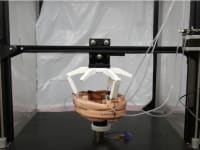
Researchers at the University of Pennsylvania have developed a gecko-inspired gripper. Like the gecko, the device has the ability to grip and release smooth surfaces like glass. The effective stickiness can also be tuned from strong to week.
R&D: Medical
Engineers Build Nano-Accordion Conductors
Engineers from North Carolina State University have created stretchable, transparent conductors with a "nano-accordion" design. The conductors could be employed in a wide variety of applications, such as flexible electronics, stretchable displays, or wearable sensors.
R&D: Robotics, Automation & Control
Bioengineers Develop Printable Silk Inks
To provide a better tool for therapeutics, regenerative medicine, and biosensing, Tufts University bioengineers have created inkjet-printable silks containing enzymes, antibiotics, antibodies, nanoparticles, and growth factors. The purified silk protein, or fibroin, offers intrinsic strength and protective...
R&D: Medical
Researchers Create Silicone Microspheres from Mist
Using misting technology found in household humidifiers, University of Illinois chemists developed a new method to create silicone microspheres. The tiny spheres could have applications in targeted medicine and imaging.
R&D: Medical
Attachable Army Device Displays Vital Signs
A Compensatory Reserve Index (CRI) device developed by Army medical researchers attaches to a soldier's finger and displays vital signs: body temperature, heart rate, breathing rate, and blood pressure. The matchbox-sized tool includes a computer display, wire, and plastic clip.
R&D: Medical
Larger Implantable Devices Avoid Immune-System Rejection
By using larger spherical components, Massachusetts Institute of Technology researchers have found a way to reduce the immune system from rejecting biomedical implant devices. The bigger spheres are better able to maintain their function and avoid scar-tissue buildup.
R&D: Medical
Device Enables Sensations in Prosthetic Hands
A Washington University team developed a novel device that may allow individuals to feel hot and cold temperatures through a prosthetic technology. If the invention works as planned, upper-limb amputees who use motorized devices would be able to feel various sensations through the prosthetic, which...
R&D: Medical
New Manufacturing Method Produces Low-Cost Nanofibers
Researchers at the University of Georgia have found a low-cost way to manufacture extraordinarily thin polymer strings. The nanofibers can be used to create advanced wound dressings, regenerate tissue, and deliver drugs directly to the site of an infection.
R&D: Medical
3D Microbattery Offers On-Chip Integration
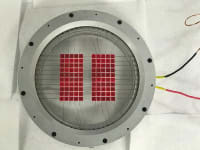
By combining 3D holographic lithography and 2D photolithography, researchers from the University of Illinois at Urbana-Champaign have demonstrated a 3D microbattery suitable for large-scale on-chip integration with microelectronic devices. Applications for the holographically patterned battery include...
R&D: Medical
Shape-Shifting GEM Sensor Responds to Radio Frequencies
Geometrically encoded magnetic sensors (GEMs), developed by researchers from National Institute of Standards and Technology (NIST) and the National Institutes of Health (NIH), react to local biochemical conditions by changing their shape and response to radio frequencies.
R&D: Robotics, Automation & Control
New Adhesive Works Underwater
An adhesive technology helps to bond human tissue in wet or moist conditions. The chemistry is based on the environmentally-friendly adhesive qualities of mussels and other shellfish.
R&D: Medical
Brain-Machine Interface Controls Prosthetic Hand
A new algorithm allows a person to use his or her thoughts to grasp a bottle or other object. The non-invasive brain monitoring technique, developed by University of Houston researchers, will help the team understand the neuroscience behind the action of grasping.
R&D: Robotics, Automation & Control
Researchers Use Water to Improve Nanowires
Rice University graduate students and researchers have made nanowires between 6 and 16 nanometers wide. The wires are made from a variety of materials, including silicon, silicon dioxide, gold, chromium, tungsten, titanium, titanium dioxide, and aluminum. The development of sub-10-nanometer sizes shows...
R&D: Medical
Researchers Improve Magnetic-Field Detector
A Massachusetts Institute of Technology team has developed a new, ultrasensitive magnetic-field detector. The device could lead to miniaturized, battery-powered devices for medical imaging.
R&D: Medical
Smartphone-Based Device Spots Molecular Tumors
A device developed by Massachusetts General Hospital investigators provides rapid, accurate molecular diagnosis of tumors and other diseases. The smartphone-based technology collects detailed microscopic images for digital analysis of the molecular composition of cells and tissues.
R&D: Medical
Researchers 'Draw' Sensors to Measure Glucose
A new tool developed by nanoengineers at the University of California, San Diego, allows users, including physicians and patients, to easily build their own sensors.
R&D: Medical
Magnetic Devices Aid Laparoscopic Surgery
Vanderbilt University researchers have created magnetically-driven laparoscopic instruments.
R&D: Medical
PolySTAT Polymer Strengthens Blood Clots
University of Washington researchers have created PolySTAT, a new injectable polymer that strengthens blood clots. The polymer, administered in a single shot, addresses internal injuries and reduces blood loss.
R&D: Medical
‘Smart Bandage’ Detects Bedsores
A new “smart bandage” from engineers at UC Berkeley uses electrical currents to detect early tissue damage from pressure ulcers, or bedsores, before they can be seen by human eyes. The device could potentially be carried by a nurse for spot-checking target areas on a patient, or incorporated into a wound...
R&D: Medical
Mobile System Captures High-Res Retinal Images
A Rice University mobileVision system monitors eye health and spots signs of macular degeneration and diabetic retinopathy.The patient-operated, portable device can be paired with a smartphone to give clinicians finely detailed images of the macula – the spot in the center of the eye where vision is...
R&D: Medical
Hearing-Loss Treatment Offers Precise Drug Delivery
Current hearing-loss treatments deliver drugs to the middle ear by requiring repeat injections. A device from The Charles Stark Draper Laboratory, Cambridge, MA, sends precise, automated, and timed quantities of one or more drugs directly into the fluid of the inner ear.
INSIDER: Materials
Sound waves passing through the air, objects that break a body of water and cause ripples, or shockwaves from earthquakes all are considered “elastic” waves. These waves travel at the surface...
Feature Image
R&D: Robotics, Automation & Control
Non-Stick Surface Technology Repels Bacteria
Harvard researchers have demonstrated a repellent surface technology that can be used with medical materials to prevent infections caused by biofilms.
R&D: Medical
Auditory Implant Bypasses Inner Ear
A team of hearing and communication experts led by the Keck School of Medicine of USC successfully implanted an auditory brainstem implant (ABI) device in four children who previously could not hear.
R&D: Medical
Smartphone Device Replicates Lab-Based Blood Test
Columbia Engineering researchers have developed a low-cost smartphone accessory that performs a point-of-care test. In fifteen minutes, the device simultaneously detects three infectious disease markers from a finger prick of blood.
R&D: Medical
Soldering Technique Makes Cheap Semiconductors
A University of Chicago research team has created a new solder for semiconductors. After being heated to several hundred degrees Celsius, the compounds of cadmium, lead, and bismuth can be applied as a liquid or paste to join two pieces of a semiconductor.
R&D: Medical
Germanium Ready for 2D Electronics
Researchers from The Ohio State University are working to turn germanium into a potential replacement for silicon.
R&D: Medical
Diagnostics-in-a-Suitcase Rapidly Detects Ebola
Scientists in field laboratories who diagnose and deal with Ebola infections often work under challenging conditions. Researchers at the German Primate Center have developed Diagnostics-in-a-Suitcase, which contains all reagents and equipment to detect the Ebola virus within 15 minutes at...

Ask the Expert

John Chandler on Achieving Quality Motion Control
Feature Image

FAULHABER MICROMO brings together the highest quality motion technologies and value-added services, together with global engineering, sourcing, and manufacturing, to deliver top quality micro motion solutions. With 34 years’ experience, John Chandler injects a key engineering perspective into all new projects and enjoys working closely with OEM customers to bring exciting new technologies to market.

Inside Story

Inside Story: Trends in Packaging and Sterilization

Feature Image

Eurofins Medical Device Testing (MDT) provides a full scope of testing services. In this interview, Eurofins’ experts, Sunny Modi, PhD, Director of Package Testing; and Elizabeth Sydnor, Director of Microbiology; answer common questions on medical device packaging and sterilization.

Videos