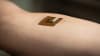

Using nanowires, Purdue University researchers has created a new implantable drug-delivery system that can be wirelessly controlled. The nanowires respond to an electromagnetic field generated by a separate device, which can be used to release a pre-loaded drug. The engineering team says that the system will eliminate tubes and wires required by other implantable devices.
"This tool allows us to apply drugs as needed directly to the site of injury," said team leader Richard Borgens, Purdue University's Mari Hulman George Professor of Applied Neuroscience and director of Purdue's Center for Paralysis Research. "It is our hope that this could one day be used to deliver drugs directly to spinal cord injuries, ulcerations, deep bone injuries or tumors, and avoid the terrible side effects of systemic treatment with steroids or chemotherapy."
The drug-delivery technology's nanowires are made of polypyrrole, a conductive polymer material that responds to electromagnetic fields. The nanowires, grown vertically over a thin gold base, can be loaded with a drug. When the correct electromagnetic field is applied, the nanowires release small amounts of the payload. By using the corresponding electromagnetic field stimulating device, the process can be started and stopped at will.
The researchers captured and transported a patch of the nanowire carpet on water droplets that were used used to deliver it to the site of injury. The nanowire patches adhere to the site of injury through surface tension. The magnitude and wave form of the electromagnetic field must be tuned to obtain the optimum release of the drug.
The team tested the drug-delivery system in mice with compression injuries to their spinal cords. The Purdue University study measured Glial Fibrillary Acidic Protein (GFAP), a molecular marker of inflammation and scar formation in the central nervous system, and found that it was reduced after one week of treatment.
A 1-2 millimeter patch of the nanowires doped with dexamethasone was placed onto spinal cord lesions that had been surgically exposed. The lesions were then closed and an electromagnetic field was applied for two hours a day for one week. By the end of the week, the treated mice had a weaker GFAP signal than the control group.