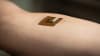

A team of engineers at Stanford University, Stanford, CA, has demonstrated that a tiny, implantable cardiac device can get its power from radio waves transmitted from a small power device on the surface of the body. The implanted device could fit on the head of pin.
In their paper, published in the journal Applied Physics Letters, the researchers demonstrated wireless power transfer to a millimeter-sized device implanted 5 centimeters inside the chest on the surface of the heart, once thought out of reach for wireless power transmission.
Wireless power solves the problem of battery size in an implanted device, as well as the need to replace batteries that are implanted.
They believe this is the first toward a time when all implants will be powered wirelessly. Beyond the heart, they say such devices might include endoscopes that can be swallowed in pill form, permanent pacemakers, precision brain stimulators, and more.