
As diabetes becomes more prevalent across the globe, it is clear that a new method to test blood glucose levels needs to be found. Sampling with needle pricks is pricks is unpleasant at best and places a significant burden on the patient population.
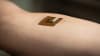
Researchers at Purdue University, West Lafayette, IN, have developed a possible solution that may someday allow diabetics to test their saliva, tears, or even urine to measure their glucose levels. The team developed a new sensor that can be cheap to build and that can detect glucose in any bodily fluid.
The technology is able to detect glucose in concentrations as low as 0.3 micromolar, far more sensitive than other electrochemical biosensors based on graphene or graphite, carbon nanotubes, and metallic nanoparticles, they report.
The sensor can distinguish between glucose and signals from other compounds that often cause interference in sensors: uric acid, ascorbic acid, and acetaminophen, which are commonly found in the blood. Unlike glucose, those compounds are said to be electroactive, which means they generate an electrical signal without the presence of an enzyme.