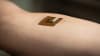

Stanford electrical engineers have created a tiny wireless chip - driven by magnetic currents - that's small enough to travel inside the human body. They hope it will someday be used for a wide range of biomedical applications, from delivering drugs to cleaning arteries.
Transcript
00:00:01 Stanford University we've built a submarine that can move around inside the body and can be controlled externally with a remote control what this allows you to do is explore the body in very non-invasive ways and to treat new types of diseases and also get new types of information about what's happening inside the body
00:00:23 it's sort of like one of those cartoons where they send a doctor inside of person to fix something but instead of sending a human or sending a doctor we're actually sending a chip here we have the actual device which is size 3x4 mm the patient is placed in some sort of static magnetic field in the animation we depict this as a table this allows the device to both be very small and
00:00:42 also very power efficient here's the antenna transmits data and power wirelessly to the device nice steering man that's perfect we are able to turn the implants to a certain direction to steer them by controlling the current on the different electrodes of the implant by turning the different switches we can tell the device to either go forward
00:01:04 turn left or turn right and we can see the data is changing on the device here on this oscilloscope by changing these switches currently we are brainstorming with the medical community and looking for potential applications doing things like putting a catheter in the heart and very precisely directing it to specific tissue is an application that can happen in the very short term usually when
00:01:28 people work on chips or biomedical devices it's usually stationary objects that take some measurements or do something like that in our case it's something that moves inside of body when you tell this to people people get really excited these sort of Technologies haven't even been possible before and so the applications that it can serve really don't exist at this
00:01:45 point it sort of opens up a whole new realm of applications for medical technology for more please visit us at stanford.edu