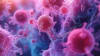

Proteins control nearly all of life's functions, but how they self-assemble - or fold - is an unsolved problem in biology. Understanding how folding goes awry could lead to cures for diseases caused by protein misfolding, like Alzheimer's and Parkinson's. Stanford University chemistry Professor Vijay Pande's project Folding@home borrows computing time from home computers to simulate how proteins fold. By modeling protein folding, Pande says, "We hope to get exquisite detail and information that you might not be able to get from experiments."
Transcript
00:00:01 Stanford University one of the goals of computational biology is to be able to simulate biological systems like proteins or nucleic acids atom by atom what these animation show is the process of how protein folds so it starts off completely unassembled and then what it starts to do is organize itself into a
00:00:23 folded structure one of the interesting things about folding is that it's important not just for when biology works but also when biology doesn't work so protein misfolding is associated with many diseases such as Alzheimer's disease Parkinson's ALS and many others what we've been able to do with folding at home is simulate the process of how
00:00:40 Alzheimer's proteins misfold and that led to very specific predictions that we were able to test recently the next steps that we've been working on is to use those results to predict what possibly might be interesting lead compounds for future Therapeutics protein folding has really been a grand problem for many decades and it's such a fundamental part of biophysics and
00:00:57 biology and so from the basic science point of view I think this is a really exciting problem for more please visit us at stanford.edu