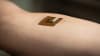

The process of monitoring blood glucose levels through finger pricking is an inconvenience at best for the estimated 26 million diabetics in the U.S. It's no mystery why researchers have continued to set their sights on developing more convenient and less invasive methods of monitoring glucose levels, including tear-based glucose sensors and non-intrusive contact lenses . Now, Brown University researchers are throwing their hats in the ring with a new kind of biochip that could allow diabetics to monitor their glucose levels using saliva.
Although glucose concentrations in saliva are typically about 100 times less concentrated than in blood, the researchers' newly developed sensor shows the potential. The sensor takes advantage of a convergence of nanotechnology and surface plasmonics, which explores the interaction of electrons and photons. Engineers etched thousands of plasmonic interferometers onto a fingernail-sized biochip and measured the concentration of glucose molecules in water on the chip. Their results showed that the specially designed biochip could detect glucose levels similar to the levels found in human saliva.
The researchers next plan to build sensors tailored for glucose and for other substances to further test the devices. Click here to read more details about their work.