
Inside this issue
Overview
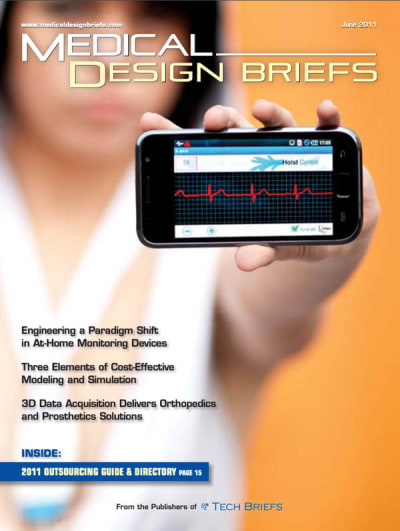
The June 2011 issue of Medical Design Briefs presents a comprehensive exploration of advancements and trends in the medical design and technology sector. This edition is particularly focused on innovative solutions that enhance patient care and streamline medical processes, reflecting the ongoing evolution in healthcare technology.
Key Highlights:
-
Engineering a Paradigm Shift in At-Home Monitoring Devices: This article discusses the growing importance of at-home monitoring devices in patient care. It emphasizes how these devices empower patients to manage their health more effectively while reducing the burden on healthcare facilities. The piece highlights various technologies that enable remote monitoring, including wearable sensors and mobile health applications, which facilitate real-time data collection and analysis.
-
Three Elements of Cost-Effective Modeling and Simulation: The issue delves into the critical role of modeling and simulation in medical device development. It outlines three essential elements that contribute to cost-effective modeling: accurate data acquisition, robust simulation tools, and iterative testing processes. By leveraging these elements, manufacturers can reduce development costs, enhance product reliability, and accelerate time-to-market for new medical devices.
-
3D Data Acquisition Delivers Orthopedics and Prosthetics Solutions: This article focuses on the advancements in 3D data acquisition technologies that are transforming orthopedics and prosthetics. It discusses how 3D scanning and printing technologies are being utilized to create customized implants and prosthetic devices tailored to individual patient anatomies. The benefits of these technologies include improved fit, enhanced functionality, and better patient outcomes.
-
2011 Outsourcing Guide & Directory: A significant feature of this issue is the 2011 Outsourcing Guide & Directory, which provides valuable resources for medical device manufacturers looking to outsource various aspects of their production and development processes. This guide includes a comprehensive list of service providers, categorized by specialty, to assist companies in finding the right partners for their needs.
Editorial Insights:
The editorial team, led by Editor Emily Chang, emphasizes the importance of innovation in the medical design field. The issue reflects a commitment to showcasing cutting-edge technologies and practices that not only improve patient care but also enhance operational efficiencies within healthcare systems. The editorial highlights the collaborative efforts between engineers, designers, and healthcare professionals in driving these innovations forward.
Industry Trends:
Throughout the magazine, several key trends are identified that are shaping the future of medical design:
-
Integration of Technology: The integration of advanced technologies such as artificial intelligence, machine learning, and the Internet of Things (IoT) is becoming increasingly prevalent in medical devices. These technologies enable smarter, more responsive devices that can adapt to patient needs in real-time.
-
Patient-Centric Design: There is a growing emphasis on designing medical devices with the end-user in mind. This patient-centric approach ensures that devices are not only functional but also user-friendly, enhancing patient compliance and satisfaction.
-
Regulatory Considerations: As the medical device landscape evolves, so do the regulatory requirements. The magazine discusses the importance of staying informed about regulatory changes and ensuring that new products meet safety and efficacy standards.
Conclusion:
The June 2011 issue of Medical Design Briefs serves as a vital resource for professionals in the medical design and technology sectors. By highlighting innovative solutions, industry trends, and practical resources, this edition equips readers with the knowledge and tools necessary to navigate the rapidly changing landscape of medical technology. The focus on at-home monitoring, cost-effective modeling, and advanced data acquisition reflects a broader commitment to improving patient outcomes and enhancing the efficiency of healthcare delivery systems. As the industry continues to evolve, staying informed and adaptable will be key to success in the field of medical design.
Features
-
Mission Accomplished
Tech Briefs
-
Tear-Based Glucose Sensor for Diabetes Monitoring
Maintaining Sterility Assurance Level in Medical Device Design
Electrocardiography (ECG) Necklace
Utilizing Machine Vision Engines for Advanced Quality Control and Object Detection
Experimental Walking Assist Device With Body Weight Support System
Wearable, Artificially Intelligent, Bionic Device