
 A new mobile phone application, developed by a team of researchers at the University of Cambridge, UK, that can turn any smartphone into a portable medical diagnostic device, could help make monitoring conditions such as diabetes, kidney disease, and urinary tract infections much easier for both patients and doctors, and could eventually be used to slow or limit the spread of pandemics in the developing world.
The app accurately measures color-based, or colorimetric, tests for use in home, clinical, or remote settings, and enables the transmission of medical data from patients directly to health professionals, say the researchers.
Due to their portability, compact size and ease of use, colorimetric tests are widely used for medical monitoring, drug testing, and environmental analysis in a range of different settings throughout the world. The tests, typically in the form of small strips, work by producing color change in a solution: the intensity of the color which is produced determines the concentration of that solution.
However, when used in a home or remote setting, these tests can be difficult to read accurately. False readings are common, which can result in erroneous diagnosis or treatment. Specialized laboratory equipment such as spectrophotometers or test-specific readers can be used to automate the readouts with high sensitivity, but they are costly.
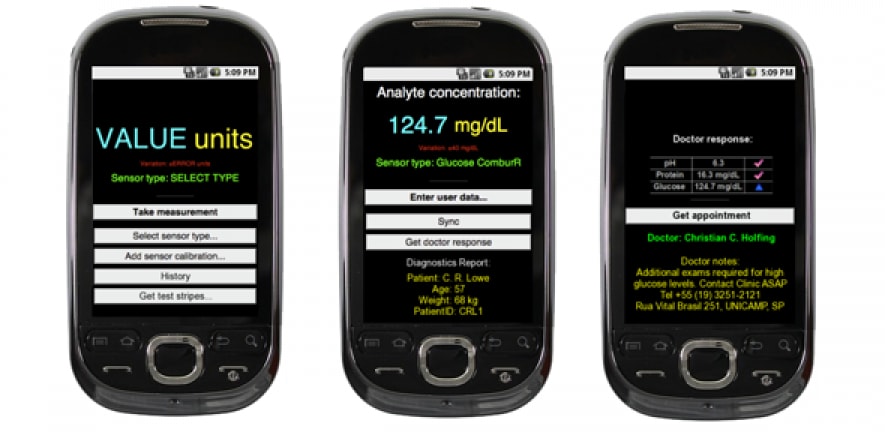
The new app, Colorimetrix, uses the phone’s camera and an algorithm to convert data from colorimetric tests into a numerical concentration value on the phone’s screen within a few seconds.
After testing urine, saliva, or other bodily fluid with a colorimetric test, the user simply takes a picture of the test with their phone’s camera. The app analyses the colors of the test, compares them with a pre-recorded calibration, and displays a numerical result on the phone’s screen. The result can then be stored, sent to a healthcare professional, or directly analyzed by phone for diagnosis.
It has been shown to accurately report glucose, protein, and pH concentrations from commercially-available urine test strips without requiring any external hardware, the first time that a mobile phone app has been used in this way in a laboratory setting.