
Digital devices can provide games, e-books, and learning apps to everyone who can operate them. But what if you can't work even the easiest of controls? Engineers at Georgia Institute of Technology, Atlanta, are working with children who have limited mobility that makes it difficult for them to perform the pinch and swipe gestures required to control touch-screen devices like tablets and smartphones.
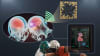
They have created Access4Kids, a wireless input device that uses a sensor system to translate physical movements into the fine-motor skills needed to control a tablet. The device, coupled with supporting open-source apps and software, allows children with fine motor impairments to access Facebook, YouTube, and custom-made apps for therapy and science education.
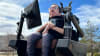
The current prototype of the Access4Kids device includes three force-sensitive resistors that measure pressure and convert it into a signal that instructs the tablet. A child can wear the device around his or her forearm or place it on the arm of a wheelchair and hit the sensors or swipe across the sensors with a fist. The combination of sensor hits or swipes gets converted to different “touch-based” commands on the tablet.
View a video below.
Transcript
00:00:05 so what we use is um basically it's a it's a pressure sensor and what that means is that when you apply a force any force a light force a hard Force you get a signal that says I'm activated um and so we combine those signals and we convert them to what does a swipe look like so as an example if you have three sensors together and you activate them one 2 three that would be a swipe so you
00:00:29 see three quential it does a swipe if you have a button pressed you just say oh I have a signal positive one that means that that button has been pressed and it doesn't matter if it was pressed by a thumb a wrist a hand a head you still get that active signal um and so access for kids is a coupling of the hardware which is the sensors the microprocessor um with software which is
00:00:53 the signal processing the communication that then gets transmitted to a tablet that takes that data combines it together and decodes the language of the child