Markets

Implants & Prosthetics

Learn more about the materials and properties of today's advanced implants and prosthetics. Examples include cardiac pacemakers, defibrillators, and orthopedics.

Stories

43
115
0
510
30
INSIDER: Medical
Neuroscientists Predict Hand's Grip Movements
Using electrophysiological measurements in the areas of the brain that are responsible for the planning and execution of hand movements, German Primate Center scientists predicted avariety of hand positions through the analysis of exact neural signals.
INSIDER: Medical
Zinc Oxide Materials Tapped for Implantable Medical Devices
A group of Korea Advanced Institute of Science and Technology (KAIST) researchers explored how the attractive physical features of zinc oxide (ZnO) materials could be more effectively used to tap into abundant mechanical energy sources to power micro devices.
INSIDER: Medical
Spinal Cord Implant Mimics Living Tissue
New therapies are on the horizon for individuals paralyzed following spinal cord injury. The e-Dura implant developed by EPFL scientists can be applied directly to the spinal cord without causing damage and inflammation.
INSIDER: Medical
Comments Requested on Cybersecurity for Medical Devices
To address the cybersecurity challenges of wireless medical infusion pumps, the National Cybersecurity Center of Excellence (NCCoE), Rockville, MD, is now inviting comments on a draft project to secure those devices. The challenges include vulnerabilities to malware or hacking and access...
INSIDER: Medical
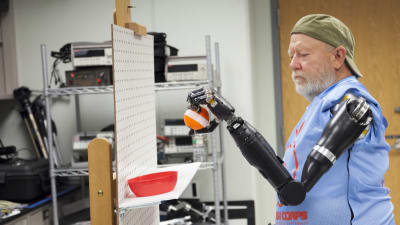
A bilateral shoulder-level amputee made history at the Johns Hopkins University Applied Physics Laboratory, Baltimore, MD, this summer when he became the first person to wear and...
Feature Image
R&D: Medical
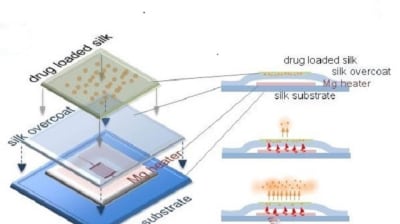
A team of engineers at Tufts University, Medford, MA, in collaboration with a team at the University of Illinois at Champaign-Urbana, demonstrated a resorbable electronic implant that...
Feature Image
R&D: Medical
Studying How Power Prosthetics Fail
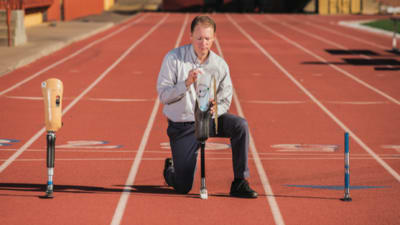
While powered lower limb prosthetics can greatly improve the mobility of amputees, errors in the technology can also cause users to stumble or fall, say researchers at North Carolina State University, Raleigh, and the University of North Carolina at Chapel Hill. They are examining what happens when these...
R&D: Medical
Wireless Brain Sensing Untethers Subjects
Scientists at Brown University, Providence, RI, say that a new wireless brain-sensing system will allow them to acquire high-fidelity neural data to advance neuroscience that cannot be accomplished with current sensors that tie subjects to cabled computer connections for analysis. Their results show that...
Briefs: Robotics, Automation & Control
Diabetes is the leading cause of limb loss, accounting for more than 65,000 amputations a year nationwide. In addition, there were more than 1,500 major limb amputations from US battle injuries in...
Feature Image
INSIDER: Medical
Using Robot Control to Improve Prosthetic Legs
An engineering professor at the University of Texas at Dallas applied robot control theory to enable powered prosthetics to dynamically respond to the wearer’s environment and help amputees walk. The robotic leg wearers were able to walk on a moving treadmill almost as quickly as an able-bodied...
INSIDER: Robotics, Automation & Control
‘Electronic Skin’ for Prosthetics Communicates Pressure
While touch may be subtle, the information it communicates can be understood and acted upon quickly. For the first time, scientists are reporting that they have developed a stretchable “electronic skin” that can detect not just pressure, but also which direction it’s coming from....
R&D: Materials
Any medical device implanted in the body or in contact with flowing blood faces two critical challenges that can threaten the life of the patient the device is meant to help: blood clotting and bacterial...
Feature Image
R&D: Electronics & Computers
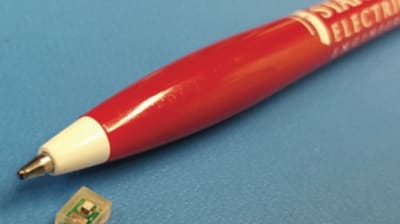
Engineers at Stanford University are working on a new generation of medical devices that would be planted deep inside the body to monitor illness, deliver therapies and relieve pain. But in order to do so, they...
Feature Image
INSIDER: Medical
Harvesting Energy for Medical Implants
Scientists at the VTT Technical Research Centre of Finland have demonstrated a new technique for harvesting energy from mechanical vibrations of the environment and converting it into electricity. They explain that energy harvesters are needed, for example, in wireless self-powered sensors and medical...
INSIDER: Medical
Developing an Artificial Retina to Restore Vision
Loss of eyesight is often caused by retinal degeneration as people age. But, an interdisciplinary team of researchers from Tel Aviv University, the Hebrew University of Jerusalem Centers for Nanoscience and Nanotechnology, both in Israel, and Newcastle University, OK, are developing a prosthetic...
INSIDER: Materials
Degradable Implants Mean Fewer Surgeries
A team of researchers at researchers at the Fraunhofer Institute for Manufacturing Technology and Advanced Materials IFAM in Bremen, Germany, have developed load bearing, biodegradable implants that are completely degradable in the body. As a first step, they have used powder injection molding to manufacture...
R&D: Materials
New research by mechanical engineers at Purdue University, West Lafayette, IN, aims at fighting bacterial biofilms that can foul implantable medical devices. Bacteria secrete a slimy substance that forms biofilms,...
Feature Image
INSIDER: Medical
3D Printed Facial Prostheses Offer Quick, Affordable Solution
Researchers from the University of Miami reported at the annual meeting of the American Academy of Ophthalmology that they have developed a fast and inexpensive way to make facial prostheses for eye cancer patients using facial scanning software and 3D printing. Their process can create...
INSIDER: Medical
Transparent Sensors Offer Better View of Brain
A team of engineers at the University of Wisconsin-Madison is developing see-through implantable medical sensor arrays, in order to help neural researchers study the brain. The technology, they say, has potential applications in neuroscience, cardiac care, and even contact lenses.
INSIDER: Materials
Dissolving Metal for Implantable Medical Devices
A team of scientists at the University of Pittsburgh, along with collaborators at the University of Cincinnati, and North Carolina Agricultural and Technical State University, are developing implantable medical devices made from biodegradable metals that can dissolve within a fixed time period,...
INSIDER: Medical
Feeling Sensations Across Prosthetic Limb
Researchers at Case Western Reserve University, Cleveland, OH, and the Louis Stokes Cleveland Veterans Affairs Medical Center have discovered that patterns of electric signals sent by a computer into nerves in a patient’s arm and to his brain, can give distinct sensations of touch to the patient’s...
Briefs: Medical
Human thumbs are amazing things, adding abilities for grasping that most other mammals don’t have. Now, mechanical engineers at MIT have developed a robot that enhances the grasping motion of the human...
Feature Image
R&D: Electronics & Computers
Researchers at the Lawrence Livermore National Laboratory (LLNL), Livermore, CA, were awarded up to $2.5 million to develop an implantable neural device with the ability to record and stimulate...
Feature Image
INSIDER: Medical
Creating Custom Medical Implants with 3D Printers
A team of engineers at Louisiana Tech University, Ruston, has developed an innovative method of using off-the-shelf 3D printers and materials to fabricate custom medical implants that can contain antibacterial and chemotherapeutic compounds for targeted drug delivery.
INSIDER: Materials
Self-Fitting Implant Material for Facial Reconstruction
Defects in the head, face, or jaw, whether from disease, injury, or birth defect, can dramatically impact a person’s appearance. A team of researchers at Texas A&M University, College Station, report that they have developed a specialized material that can expand with warm salt water to...
INSIDER: Medical
What’s the Buzz? Fly Sound Processing Could Help Humans
A team of engineers at The University of Texas at Austin has developed a tiny, low-power device that mimics a fly’s hearing mechanism, which could be used to build the next generation of hypersensitive hearing aids with intelligent microphones that could adaptively focus only on those...
R&D: Test & Measurement
A team of engineers at Purdue University, West Lafayette, IN, say they have developed a technique that could produce “soft machines” made of elastic materials and liquid metals for potential...
Feature Image
INSIDER: Medical
Untangling the Secret of Barnacle Superglue
The strength of barnacle cement is unbeaten when compared to anything man-made, say researchers at Newcastle University, UK. It can stick to any surface, under any conditions. But exactly how it works has been a mystery. The international team of scientists have shown for the first time that barnacle...
R&D: Medical
A team of scientists at MIT has developed a new sensor that, they say, can enable long-term monitoring of oxygen levels in cancerous tumors, which may advance diagnosis and treatment.
Feature Image

Ask the Expert

Eric Dietsch on the Benefits of Nitinol Wire
Feature Image

In collaboration with the Fort Wayne Metals Engineering team, Eric Dietsch focuses on supporting customers with material recommendations, product development, and education. Eric is available to help you and your company with any Nitinol-related questions or needs that you may have.

Inside Story

Inside Story: Trends in Packaging and Sterilization

Feature Image

Eurofins Medical Device Testing (MDT) provides a full scope of testing services. In this interview, Eurofins’ experts, Sunny Modi, PhD, Director of Package Testing; and Elizabeth Sydnor, Director of Microbiology; answer common questions on medical device packaging and sterilization.

Videos