
White Paper: Manufacturing & Prototyping
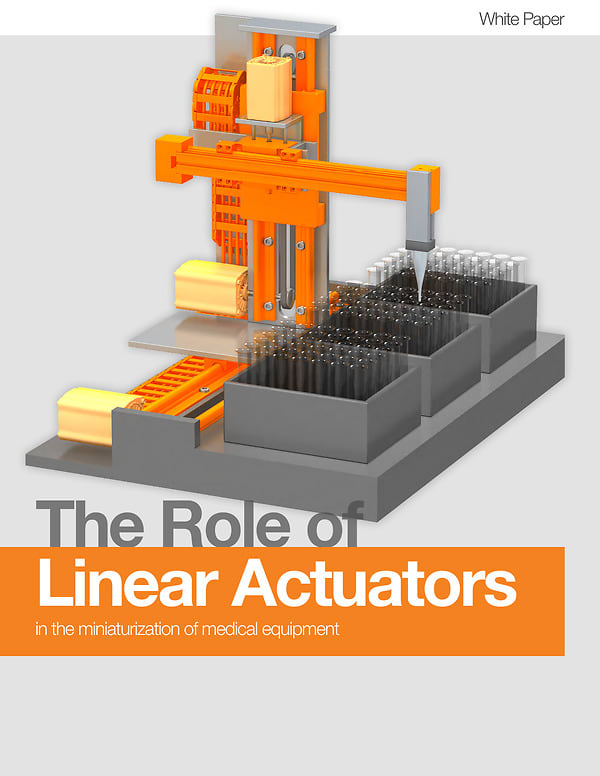
The Role of Linear Actuators in the Miniaturization of Medical Equipment
SPONSORED BY: ![]()

The medical industry is constantly growing, which has led to stricter requirements for medical equipment. Installation space is one particular area where designers and manufacturers need to adapt, as equipment is required to fit into ever smaller spaces to improve accessibility, affordability, and patient outcomes. Learn how miniature linear actuators are becoming essential to medical device design across various sub-groups of medical equipment, including surgical equipment, patient handling and positioning equipment, and hematology equipment.
Don't have an account?
Overview
This white paper from igus® explores the critical role of miniature linear actuators in the ongoing miniaturization and innovation of medical equipment. As the medical industry demands smaller, more precise, and cost-effective devices, miniature linear actuators have emerged as key components enabling these advances across various medical sectors.
Miniaturization is vital for enhancing precision in delicate medical tasks such as microsurgery, blood analysis, and imaging, ultimately improving patient outcomes. Smaller devices also increase portability and accessibility, particularly important as telehealth grows and aging populations require more at-home care. Reduced component size lowers production costs, potentially making healthcare more affordable.
Technological advancements in high-performance plastics and microelectronics have made it possible to develop smaller, durable actuators capable of reliable, maintenance-free operation. These materials allow for dry-running actuators that operate without lubricants, maintaining hygiene in surgical and diagnostic equipment.
The paper highlights three major application areas:
-
Surgical Equipment: Miniature linear actuators power robotic surgery systems, enabling minimally invasive procedures with high precision. This reduces tissue trauma, speeds recovery, and improves surgical outcomes. Innovations in robotic endoscopy, such as flexible robotic scopes, rely on precise actuators to enhance diagnostic accuracy and patient comfort.
-
Patient Handling and Positioning Equipment: Actuators enhance patient comfort in beds and chairs by providing smooth, stable movements with vibration damping. Their small size facilitates compact, portable designs suitable for at-home care, supporting the expected growth in the home healthcare market.
-
Hematology Equipment: Devices like blood analyzers and hemodialysis machines depend on miniature actuators for accurate sample handling and blood pump operation. These actuators offer consistent, quiet movement essential for both clinical and at-home use, with long service life and minimal maintenance.
Additionally, actuators improve the flexibility and precision of rehabilitation equipment and imaging tables, enabling dynamic movements that enhance diagnostic capabilities.
Looking forward, the trend toward miniaturization will continue, fueled by new materials and actuator designs. Surgical robots such as Sony’s microsurgery assistant, Intuitive Surgical’s da Vinci 5, and J&J’s Ottava system illustrate the potential for ongoing innovation.
Overall, miniature linear actuators are fundamental to advancing medical technology by improving device precision, efficiency, accessibility, and patient outcomes, thereby shaping the future of healthcare equipment.