
Forgot login?   Register

Medical Design Briefs

  Subscribe to Defense Tech Briefs  
  • Home
  • News
  • Features
  • Tech Briefs
  • Products
  • White Papers
  • Webinars
  • Video
  • Subscribe

Topics

  • Manufacturing & Prototyping
  • Surgical Robotics
  • Custom & Contract Manufacturing
  • Software
  • Imaging & Diagnostics
  • Monitoring & Testing
  • Rehabilitation & Physical Therapy
  • Biosensors
  • Drug Delivery & Dispensing
  • Electronics
  • Automation & Controls
  • Implants & Prosthetics
  • Mechanical Components
  • Materials / Adhesives / Coatings
  • Surgical Lasers
  • Optics/Photonics
  • Inspection Equipment

Newsletter

Subscribe today to receive the INSIDER, a FREE e-mail newsletter from Medical Design Briefs featuring exclusive previews of upcoming articles, late breaking NASA and industry news, hot products and design ideas, links to online resources, and much more.

Sign up now >>

Tech Briefs
Subscribe to this RSS Feed

65
169
16530
The Next Generation of Cold Immersion Dry Suit Design Evolution for Hypothermia Prevention
Posted in Bio-Medical, Rehabilitation & Physical Therapy, Rehabilitation & Physical Therapy, Medical, Briefs, MDB on Saturday, June 01 2013

The system design recovers warm exhaled air and re-circulates it inside the suit.

A body at sea is vulnerable to hypothermia, which often leads to loss of life. Hypothermia is caused by the differences between the core body temperature and the surrounding air and seawater temperatures. The greater the differences between the body core temperature and the sea temperature, the more rapidly the core body temperature will drop, and hypothermia can quickly set in. Heat loss is primarily caused by conduction of heat away from the body. Most cold immersion suits on the market are passive designs that only insulate the body against the cold, although some cold immersion suits use special materials such as paraffin to absorb heat and to radiate the heat back to the body. This new utility patent is an active design that relies on the lung’s role as an organic heat exchanger for providing deep body core heating of air. It is based on the fact that the greatest heat loss mechanism for insulated human body immersed in a cold water environment is due to heat loss through respiration.
Read More >>
16531
Key Considerations for Integrating Wireless Technology in Medical Devices
Posted in Bio-Medical, Manufacturing & Prototyping, Electronics, Electronic Components, Electronics, Medical, Briefs, MDB on Saturday, June 01 2013

Significant opportunities exist to incorporate wireless technology into medical devices.

Wireless technology increases the effectiveness of countless every day functions. While some simply are about the convenience factor, like being able to quickly transmit patient records from one hospital to another via email, others have the power to be lifesaving. Medical device manufacturers know that there is significant opportunity to incorporate wireless technology into medical devices. However, design engineers who are extremely knowledgeable about the design of medical devices face a number of challenges in marrying off-the-shelf wireless chipsets with proprietary medical devices in development.
Read More >>
16532
Fifty Years of Small Diameter High Quality Precision Tube Technology
Posted in Bio-Medical, Manufacturing & Prototyping, Custom & Contract Manufacturing, Materials / Adhesives / Coatings, Materials, Metals, Medical, Briefs, MDB on Saturday, June 01 2013

Technology, applications, and materials evolve from analog meters to cutting edge medical devices.

Over the past fifty years, thin wall small diameter precision metal tubing has undergone quite a transformation. From its use in the mid-1960s as pointers for analog meters, tubes have become essential components in the most cutting edge medical devices. To make that transition, precision tube companies have had to adapt to changing technology, applications, and materials.
Read More >>
16356
Choosing Chiller Pumps to Cool Medical Lasers
Posted in Bio-Medical, Manufacturing & Prototyping, Custom & Contract Manufacturing, Drug Delivery & Dispensing, Mechanical Components, Photonics, Lasers & Laser Systems, Medical, Drug Delivery & Fluid Handling, Briefs, MDB on Wednesday, May 01 2013

Medical lasers must be cooled either by premounted or portable chiller systems.

Laser systems continue to grow in application use throughout the medical industry. Applications for laser systems include diagnostic analysis systems, DNA sequencing systems, dental cleaning and surgery, skin care, eye surgery, tattoo removal, and much more. These systems commonly require cooling of the laser and other electronic components either by air flow on lower power laser systems, or by fluid circulation/chiller systems on higher power lasers. Higher power laser require an increased level of cooling capacity that results in systems that provide several gallons per minute of fluid circulation. This increased flow rate will maintain the laser and other electronics at the proper operating conditions.

Read More >>
16358
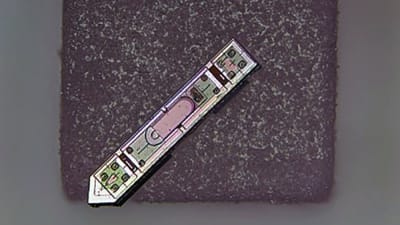
Micro-Endoscope as Thin as a Human Hair
Posted in Bio-Medical, Imaging & Diagnostics, Monitoring & Testing, Electronics, Optics/Photonics, Imaging, Photonics, Fiber Optics, Optics, Medical, Diagnostics, Briefs, MDB on Wednesday, May 01 2013

Single fiber endoscope increases resolution fourfold over previous similar devices.

Engineers at Stanford University have developed and demonstrated a prototype single-fiber endoscope that, they say, quadruples the resolution over existing designs, which might lead to the development of needle-thin, minimally invasive endoscopes able to view features out of reach of today’s instruments.
Read More >>
16357
Hand-Based Biometric Analysis
Posted in Bio-Medical, Medical, Briefs, MDB on Wednesday, May 01 2013
Hand-based biometric analysis systems and techniques provide robust handbased identification and verification. An image of a hand is obtained, which is then segmented into a palm region and separate finger regions. Acquisition of the image is performed without requiring particular orientation or placement restrictions. Segmentation is performed without the use of reference points on the images. Each segment is analyzed by calculating a set of Zernike moment descriptors for the segment.

Read More >>
16359
New Material Enables Improved Ultrasound
Posted in Bio-Medical, Imaging & Diagnostics, Optics/Photonics, Imaging, Optics, Materials, Metals, Medical, Patient Monitoring, Diagnostics, Nanotechnology, Briefs, MDB on Wednesday, May 01 2013
Ultrasound technology could soon be improved to produce high-quality, highresolution images, thanks to the development of a new key material by a team of researchers in the Department of Biomedical Engineering at Texas A&M University, College Station.
Read More >>
16159
Functional Near-Infrared Spectroscopy Signals Measure Neuronal Activity in the Cortex
Posted in Bio-Medical, Imaging & Diagnostics, Medical, Patient Monitoring, Briefs, MDB on Monday, April 01 2013

This non-invasive monitoring method can be used to evaluate the mental state of people performing critical tasks.

Functional near infrared spectroscopy (fNIRS) is an emerging optical neuroimaging technology that indirectly measures neuronal activity in the cortex via neurovascular coupling. It quantifies hemoglobin concentration ([Hb]) and thus measures the same hemodynamic response as functional magnetic resonance imaging (fMRI), but is portable, non-confining, relatively inexpensive, and is appropriate for long-duration monitoring and use at the bedside. Like fMRI, it is noninvasive and safe for repeated measurements. Patterns of [Hb] changes are used to classify cognitive state. Thus, fNIRS technology offers much potential for application in operational contexts. For instance, the use of fNIRS to detect the mental state of commercial aircraft operators in near real time could allow intelligent flight decks of the future to optimally support human performance in the interest of safety by responding to hazardous mental states of the operator. However, many opportunities remain for improving robustness and reliability. It is desirable to reduce the impact of motion and poor optical coupling of probes to the skin. Such artifacts degrade signal quality and thus cognitive state classification accuracy. Field application calls for further development of algorithms and filters for the automation of bad channel detection and dynamic artifact removal.
Read More >>
16160
Using CT Scanning to Test/Inspect Medical Devices in the Design or Production Phase
Posted in Bio-Medical, Manufacturing & Prototyping, Custom & Contract Manufacturing, Monitoring & Testing, Optics/Photonics, Inspection Equipment, Medical, Briefs, MDB on Monday, April 01 2013

CT scanning for test and inspection of medical products continues to grow.

The rapid advance of medical technology has created a growing need for ever more precise technologies to measure and inspect medical components. One of the most accurate scanning technologies, and one whose use is growing in the medical equipment community, is CT scanning.
Read More >>
16161
Force Feedback Modulated Joint Control for Prosthetic Ankle
Posted in Bio-Medical, Manufacturing & Prototyping, Implants & Prosthetics, Biosensors, Mechanical Components, Implants & Prosthetics, Medical, Briefs, MDB on Monday, April 01 2013

Prosthesis automatically adjusts gait, incline, and heel height.

Human gait is an infinitely variable and complex feedback system to maximize efficiency and stability in movement. Typical prosthetic technology utilizes fixed springs to maximize energy return but do nothing to adapt to the variable environment experienced by users. The Magellan microprocessor foot/ankle (MFA) system, developed by Orthocare Innovations, utilizes sophisticated, patented control schemes based on real-time force feedback loops to increase efficiency and optimize a real world gait.
Read More >>
15905
Managing Post-Traumatic Pain with Ultrasound Neuromodulation
Posted in Bio-Medical, Electronics, Treatment Devices, Medical, Drug Delivery & Fluid Handling, Briefs, MDB on Friday, March 01 2013

This ultrasound technique is an alternative to narcotics for treating pain from acute trauma.

The objective of this effort was to demonstrate the feasibility of using ultrasound induced neuromodulation (UNMOD) to manage pain. Pain management for acute trauma is generally accomplished with narcotics, which is less than ideal in a battlefield scenario. The technology of peripheral ultrasound neuromodulation (PUNMOD) offers several advantages over narcotics and current methods of neurostimulation. PUNMOD has the potential to be highly portable as a battlefield analgesic, and has the advantage of leaving the patient’s cognitive abilities intact. In addition, PUNMOD does not carry with it the risk of abuse or the need for the surveillance that is associated with pharmaceutical analgesics.
Read More >>
15906
Environmental Awareness Leads to PVC-Free Assemblies
Posted in Bio-Medical, Manufacturing & Prototyping, Custom & Contract Manufacturing, Materials / Adhesives / Coatings, Materials, Plastics, Medical, Briefs, MDB on Friday, March 01 2013

Totally PVC-free products provide an environmentally safer alternative.

Over the last several years, the medical industry has become more aware of the toxic side effects of polyvinyl chloride (PVC). The American Public Health Association passed a resolution in November 2011 urging hospitals, schools, and nursing homes to reduce the amount of PVC they use.
Read More >>
15907
Prosthetic Foot Uses Unique Aerospace Material
Posted in Bio-Medical, Manufacturing & Prototyping, Implants & Prosthetics, Materials / Adhesives / Coatings, Materials, Composites, Plastics, Implants & Prosthetics, Medical, Briefs, MDB on Thursday, February 28 2013

A new space-age material creates a prosthetic foot that’s built to last.

Formerly used only in the aerospace arena, Flexeon is a radical departure from the rigid carbon fiber materials found in most prosthetic feet. It’s a specially- formulated reinforced fiberglass material that is nearly indestructible, extremely flexible, and available exclusively on Ability Dynamic prosthetic devices, such as the RUSH™ foot. Flexeon underwent thorough and extensive testing for flexibility, material strength, and durability in prosthetic labs, as well as on patients aged 21 to 69 in clinical trials. The results of these tests and trials revealed that this high-tech material is three times more flexible than carbon and much more durable than current standard carbon fiber products.
Read More >>
15904
Instantly Capture, Edit, and Store Medical Images via Online Applications
Posted in Bio-Medical, Software, Imaging & Diagnostics, Visualization Software, Imaging, Medical, Diagnostics, Briefs, MDB on Thursday, February 28 2013

Online tool allows user to conveniently capture and manage images from medical devices.

A new image capture software development kit (SDK), called the Dynamic Web TWAIN, allows the simplified creation of an online tool to manage images of patient records. It enables image application providers to deliver a method to capture images from medical devices, such as intraoral cameras and digital x-ray equipment, and then send the medical images to a central web server. Such medical image captures can be sent alongside a patient’s identification, results data, applied treatments, next visit schedules, and more. An SDK allows implementation within popular Internet browsers, including Internet Explorer, Chrome, Firefox, Safari, or Opera. (See Figure 1)
Read More >>
15688
New Blood Pressure Connectors Prevent Misconnects
Posted in Bio-Medical, Manufacturing & Prototyping, Drug Delivery & Dispensing, Materials / Adhesives / Coatings, Mechanical Components, Materials, Plastics, Medical, Briefs, MDB on Friday, February 01 2013

Fittings make quick connections easier and safer, even in low-light situations.

Healthcare professionals use medical devices in a variety of settings and situations from urgent to routine. In an emergency, any sort of confusion, hindrance, or hesitation concerning the most minor detail or part of a device can mean a matter of life or death. As a result, there is a constant battle among medical device manufacturers to develop products with superior ergonomics, risk-free designs, and the ability to meet extensive technical requirements—all while maintaining a reasonable profit margin. In response to these concerns, Value Plastics has developed a new line of quick connect fittings. Their BPL Series of tubing connectors incorporates a number of features that are not only aimed at meeting engineers’ needs but also designed to ease users’ stress and frustration that can arise from use in critical situations.
Read More >>
15689
Transferrable Sensor Tattoo Measures Metabolic Stress
Posted in Bio-Medical, Materials / Adhesives / Coatings, Biosensors, Medical, Briefs, MDB on Friday, February 01 2013

Smiley sensor works like a temporary tattoo to detect disease.

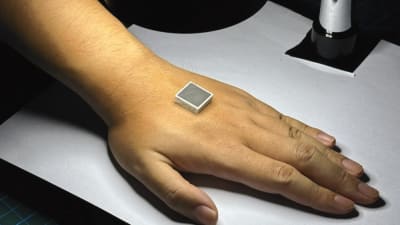
A medical sensor, that adheres to the skin like a temporary tattoo could make it easier for doctors to detect metabolic problems in patients as well as help coaches to fine-tune athletes’ training routines, say researchers at the Department of Physical & Environ mental Sciences at the University of Toronto, Scarborough, Canada (UTSC). The entire sensor was designed as a thin, flexible package shaped like a smiley face.
Read More >>
15691
Extreme Ionizing-Radiation-Resistant Bacterium
Posted in Bio-Medical, Monitoring & Testing, Medical, Briefs, MDB on Friday, February 01 2013

Deinococcus phoenicis sp. nov. can be used as an indicator for sterilization processes in food, aerospace, medical, and pharmaceutical applications.

There is a growing concern that desiccation and extreme radiation-resistant, non-spore-forming microorganisms associated with spacecraft surfaces can withstand space environmental conditions and subsequent proliferation on another solar body. Such forward contamination would jeopardize future life detection or sample return technologies. The prime focus of NASA’s planetary protection efforts is the development of strategies for inactivating resistance-bearing microorganisms. Eradi cation techniques can be designed to target resistance-conferring microbial populations by first identifying and understanding their physiologic and biochemical capabilities that confers its elevated tolerance (as is being studied in Deinococcus phoenicis, as a result of this description). Furthermore, hospitals, food, and government agencies frequently use biological indicators to ensure the efficacy of a wide range of radiation-based sterilization processes. Due to their resistance to a variety of perturbations, the non-spore forming D. phoenicis may be a more appropriate biological indicator than those currently in use.
Read More >>
15692
Porcupine Quills Aid Device Design
Posted in Bio-Medical, Drug Delivery & Dispensing, Materials / Adhesives / Coatings, Medical, Briefs, MDB on Friday, February 01 2013

Understanding the mechanisms behind quill penetration and extraction could help engineers design better medical devices.

Once a porcupine’s quill penetrates your skin, it’s very difficult to remove. That’s the inspiration behind research at Massachusetts Institute of Technology and Brigham and Women’s Hospital, Boston, to develop new types of adhesives, needles, and other medical devices.
Read More >>
15693
Self-Charging Power Cell for Small Devices
Posted in Bio-Medical, Electronics, Batteries, Electronic Components, Power Supplies, Medical, Briefs, MDB on Friday, February 01 2013

A hybrid power cell uses a new technique for electrical charge conversion and storage.

Scientists at Georgia Tech say that they have developed a new self-charging power cell technology that directly converts mechanical energy to chemical energy. Then, the power is stored until it is needed to generate electricity. This hybrid generator- storage cell utilizes mechanical energy more efficiently than systems using separate generators and batteries, they say.
Read More >>
15500
Medicine Delivery Device With Integrated Sterilization and Detection
Posted in Bio-Medical, Drug Delivery & Dispensing, Medical, Drug Delivery & Fluid Handling, Briefs, MDB on Tuesday, January 01 2013

This automated medicine delivery device would ensure that patients receive medication on schedule and at the right dosage level.

Sterile delivery devices can be created by integrating a medicine delivery instrument with surfaces that are coated with germicidal and anti-fouling material. This requires that a large surface-area template be developed within a constrained volume to ensure good contact between the delivered medicine and the germicidal material. Both of these can be integrated using JPL-developed silicon nanotip or cryo-etch black silicon technologies with atomic layer deposition (ALD) coating of specific germicidal layers.

Read More >>
15501
Less-Invasive Ventricular Assist Device for Late-Stage Heart Failure
Posted in Bio-Medical, Manufacturing & Prototyping, Implants & Prosthetics, Mechanical Components, Treatment Devices, Medical, Drug Delivery & Fluid Handling, Briefs, MDB on Tuesday, January 01 2013

First full-support mini cardiac pump FDA approved as bridge to cardiac transplantation.

The first full-support, miniaturized ventricular assist device designed to be placed in the pericardial space, was approved by the FDA in late November. HeartWare International, Inc., Framingham, MA, an innovator of less invasive, miniaturized circulatory support technologies to treat advanced heart failure, said that its Ventricular Assist System was approved as a bridge to cardiac transplantation in patients who are at risk of death from refractory end-stage left ventricular heart failure.
Read More >>
15502
Integrating Electrical Systems into 3D Mechanical Models
Posted in Bio-Medical, Software, Electronics, Software, Computer-Aided Design (CAD), Computer-Aided Engineering (CAE), Computer-Aided Manufacturing (CAM), Electronic Design Automation (EDA), Mathematical/Scientific Software, Optical Design Software, Simulation Software, Medical, Briefs, MDB on Tuesday, January 01 2013

Real-time integration of 2D schematics and 3D models allows mechanical and electrical teams to better collaborate and deliver more accurate designs.

Product development teams are under increasing pressure to engineer more complex products that combine numerous electrical systems within a single design, including visual interfaces, power systems, logic controllers, complex wiring and harnesses. Simplifying the design of these electro-mechanical systems using intelligent design tools, and a shared, comprehensive parts database, medical device designers are able to achieve significant cost savings. These savings are multiplied when this electrical design work is done in perfect synchronization with the mechanical and industrial design teams using a shared data model.
Read More >>
15503
Defibrillator Setting Change Leads to Health Gains
Posted in Bio-Medical, Monitoring & Testing, Implants & Prosthetics, Treatment Devices, Implants & Prosthetics, Medical, Patient Monitoring, Briefs, MDB on Tuesday, January 01 2013

Survival climbs, risk of unnecessary shocks plummets

A new study at the University of Rochester Medical Center Rochester, NY, shows that defibrillators, which are designed to detect and correct dangerous heart rhythms, can be programmed to help users live longer, better lives, than they currently do.
Read More >>
15285
Paralympian ‘Catapults’ to a Silver Medal
Posted in Bio-Medical, Manufacturing & Prototyping, Implants & Prosthetics, Briefs, MDB on Saturday, December 01 2012

A new type of carbon fiber running foot helped propel an American sprinter to a medal at the London Paralympic Games.

At London’s Paralympic Games in September, USA track and field star Richard Browne took the silver medal in the highly anticipated 100-meter race for below-the-knee amputees. The 21-year-old was the first athlete to train with and compete with the Catapult® Running Foot from his sponsor Freedom Innovations, LLC, Irvine, CA, at a Paralympic Games.

Read More >>
15286
Wideband Single-Crystal Transducer for Bone Characterization
Posted in Bio-Medical, Imaging & Diagnostics, Monitoring & Testing, Medical, Diagnostics, Briefs, MDB on Saturday, December 01 2012

These transducers have uses in medical ultrasound imaging and room-temperature ultrasonic flow meters.

The microgravity conditions of space travel result in unique physiological demands on the human body. In particular, the absence of the continual mechanical stresses on the skeletal system that are present on Earth cause the bones to decalcify. Trabecular structure decreases in thickness and increases in spacing, resulting in decreased bone strength and increased risk of injury. Thus, monitoring bone health is a high priority for long-term space travel. A single probe covering all frequency bands of interest would be ideal for such measurements, and this would also minimize storage space and eliminate the complexity of integrating multiple probes.
Read More >>
«StartPrev12345678910NextEnd»

MDB Digital Magazine


Click on thumbnail to view last month's issue.
Subscribe now to get access to the latest issue.

Outsourcing Guide


Subscribe to Medical Design Briefs

Trending this Month

© 2009-2013 Tech Briefs Media Group an SAE International Company

  • About
  • Contact
  • Advertising
  • Privacy
  • Subscribe

publications:

  • Defense Tech Briefs
  • Embedded Technology
  • NASA Tech Briefs
  • Green Design Briefs